
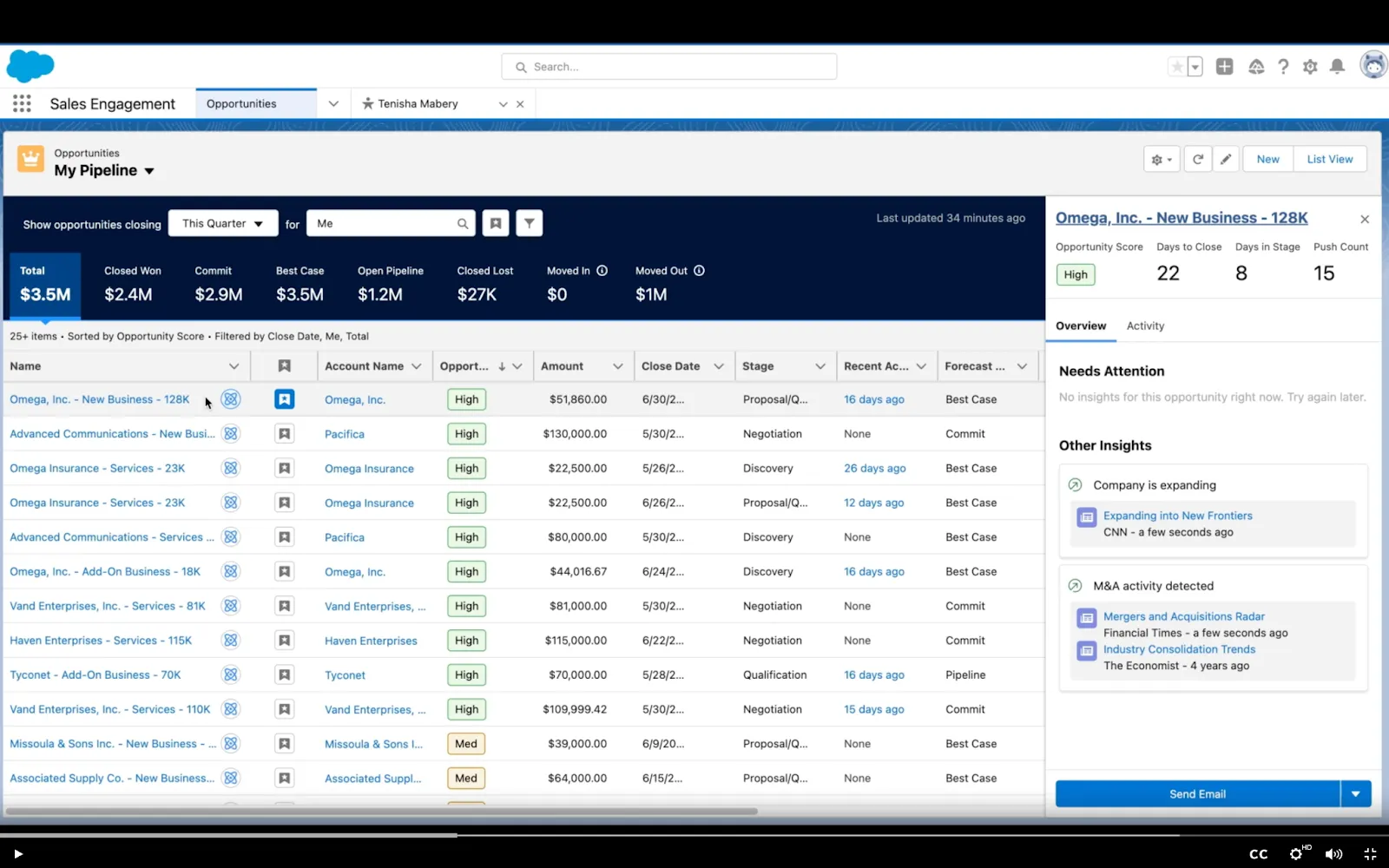
Customer Relationship Management (CRM) software is a system for managing every interaction your company has with customers and prospects. A good CRM keeps teams connected, tracks each relationship in one place, gives every team a shared view of every lead, and powers the workflows that turn prospects into revenue.
That’s the marketing-page definition. The real reasons teams adopt a CRM are more specific, and usually more painful. Three reasons come up over and over in the conversations we have.
1. Disconnected teams, disconnected data
When customer information lives in emails, sticky notes, Slack threads, and a spreadsheet that one person in operations maintains in their head, the relationship gets impossible to track. People make mistakes. Things slip. The same prospect gets contacted twice with slightly different positioning by two team members who didn’t know about each other. The follow-up that was supposed to happen on Tuesday happens on Friday, by which point the prospect has gone with the competitor.
A well-configured CRM gives the company a single source of truth. Everybody is on the same page, looking at the same record, working off the same context. The platform enforces it because there’s nowhere else for the data to live.
This sounds basic. In our experience, it’s the single biggest unlock most teams get when they adopt a CRM seriously. The gain isn’t from any particular feature. It’s from the fact that the team finally stops working around the absence of one.
2. Lack of real-time customer data
A single source of truth means every team can deliver consistent service across phone, chat, email, and social media, with everybody accessing the latest data simultaneously.
Some specific situations where this matters:
- A customer calls support. The agent can see what the sales team promised them last week. The conversation goes differently.
- Marketing knows which leads are already in active sales conversations. They stop sending generic nurture emails to people who are about to sign.
- Account management sees that a key contact has been quiet for three months. They reach out before the renewal goes sideways.
- Finance sees that a deal closed last week but the invoice hasn’t been sent. They send it before the customer’s quarter ends.
Each of those is a small thing. Together they’re the difference between a team that feels coordinated to the customer and a team that doesn’t.
3. Executives can’t see the big picture
CRM systems don’t just collect data. They make it analysable.
Managers see progress on auto-generated reports and dashboards. Executives see pipeline health, team performance, and the leading indicators of revenue without having to ask anybody for a pivot table. Forecasts come from the same data the team is working off, which means they’re more honest than the spreadsheet a regional manager assembles every Friday afternoon.
The deeper benefit, though, is that a good CRM tells you what your customers actually want. Their preferences, their behaviours, the patterns in how they engage with you. That’s the raw material of better product positioning, better resource allocation, and better decisions about where to invest next quarter. AI features layered on top of CRM data turn descriptive analytics (“here’s what happened”) into predictive analytics (“here’s what’s about to happen, and here’s what you should do about it”).
That’s a different conversation in the boardroom than reading off last quarter’s numbers.
What teams see after switching
The numbers Salesforce publishes for sales teams that move onto its platform are striking, even if you discount them generously:
- +30% sales revenue
- +77% win rate
- +75% faster deal closure
(Source: salesforce.com/crm/what-is-crm)
Your mileage will vary. The point is not that adopting any CRM gets you a 77% win rate. The point is that the gap between “running sales on tools that weren’t designed for it” and “running sales on a platform that was” is large enough that companies who switch generally don’t switch back.
The harder question
If you’re at the point where this conversation feels relevant, the harder question isn’t whether to adopt a CRM. It’s which one, and what to start with.
A CRM you don’t use well is more expensive than no CRM at all. The licences are real, the implementation cost is real, and the opportunity cost of a half-finished rollout that the team gives up on is the highest of all. We’ve cleaned up enough of those to know.
We’re partial to Salesforce for reasons we’ve written about in the cloud portfolio post, but the right answer always depends on what your team is actually trying to do, who is going to run it, and how much complexity your business can absorb in the first six months.
If you want to talk through that decision, we’re easy to reach.